
Paint projects usually start out feeling pretty low-stress. Pick a color. Freshen things up. Then you read the can and realize paint has opinions about humidity, salt exposure, surface types, and cure time. People tell me this is where the project suddenly feels more serious.
On St. Simons Island, that seriousness is warranted. August brings steady heat, heavy humidity, salt air drifting in from the ocean, and pop-up storms that don’t ask permission. The paint you choose has to live in that environment every day, not just look good the week it goes on.
If you’re planning an exterior painting project this August, or even touching up trim or railings, paying attention to which paint goes where helps your home hold up longer. Residential painters see it constantly. When paint doesn’t match coastal conditions, the wear shows up fast.
Siding, trim, railings and porch floors on the same house each need a different paint or stain. See our exterior painting.
Save this exterior paint guide on Pinterest
Golden Isles Weather Is Tough on Paint
St. Simons homes live in a moisture-rich environment. Even when it’s not raining, humidity hangs in the air. Salt from the ocean travels farther inland than people realize. Add strong sun and frequent storms, and paint takes a beating.
Exterior painters in St. Simons Island, GA look for paints that can handle:
- High humidity day and night
- Salt carried in coastal air
- Strong UV exposure
- Sudden summer rainstorms
Interior paint outside just isn’t built for this. Exterior paint designed for coastal areas stays flexible, resists mildew, and protects surfaces against salt and sun exposure.
And here, salt exposure is constant.
August Painting Works, With the Right Approach
August is a common month for exterior painting on St. Simons Island. Spring rain has mostly passed, and temperatures stay warm enough for curing. That’s the upside.
The challenge is timing.
Morning moisture can linger longer than expected. Afternoon heat can push surface temperatures higher than the air. And storms can roll through quickly, especially later in the day.
Latex exterior paints usually perform better here because they:
- Handle humidity more predictably
- Dry evenly without trapping moisture
- Resist mildew growth
- Stay flexible under heat and sun
Oil-based paints still show up in certain situations, but they’re less forgiving when humidity stays high overnight.
One Home, Many Surfaces, Many Paint Needs
Homes on St. Simons Island often include wood siding, trim, concrete, brick, stucco, decks, and metal railings. Each surface reacts differently to salt air and moisture.
Exterior painters see issues most often when one paint is used everywhere.
Wood Siding and Trim
Wood absorbs moisture easily near the coast. Paint needs flexibility and mildew resistance or it will blister and peel.
Brick, Stucco, and Concrete
These surfaces need breathable coatings. Trapping moisture leads to flaking and surface damage after storms.
Metal Railings and Fixtures
Metal needs corrosion-resistant primers and paints. Salt air speeds up rust if protection is skipped.
Decks, Porches, and Stairs
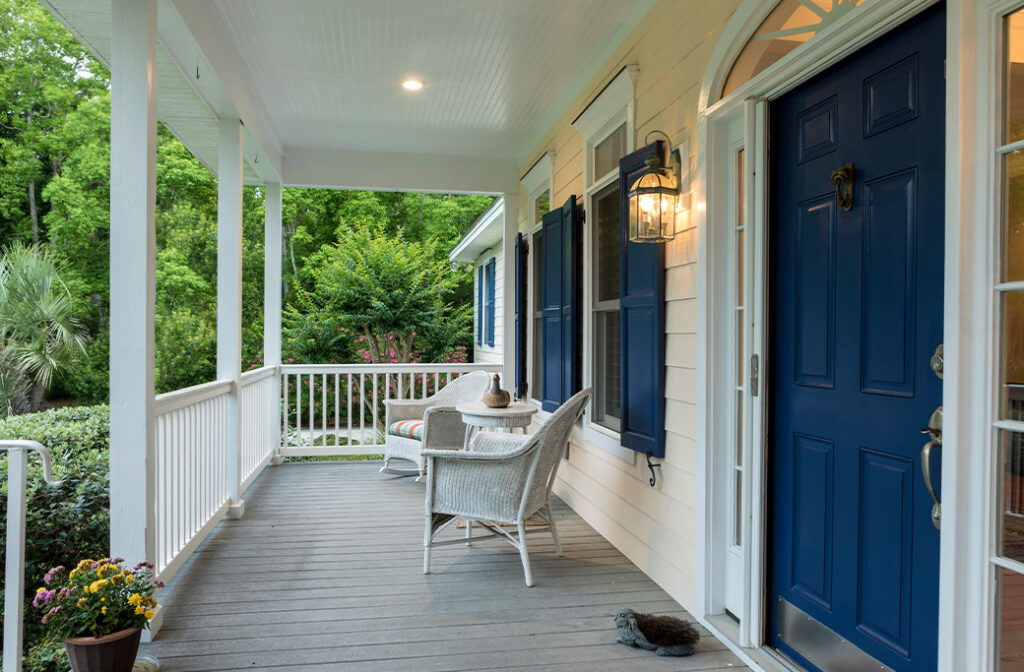
These areas need stains or specialty coatings designed for foot traffic and moisture. Regular exterior wall paint won’t last here.
New or well-kept wood takes a semi-transparent stain so the grain shows. Weathered or previously coated decks need semi-solid or solid stain to cover. See our porch and deck work.
Save this deck stain guide on Pinterest
Using leftover paint on the wrong surface almost always shortens the life of the job.
Sheen Choice Matters in Coastal Light
Bright coastal light shows everything. Sheen choice affects both durability and appearance.
- Flat finishes hide imperfections but don’t clean easily
- Satin finishes are a popular choice for siding
- Semi-gloss works well on trim but highlights flaws
Paint that looks calm in morning shade can feel much brighter once the sun hits it. Testing samples on different sides of the house helps avoid surprises.
New or well-kept wood takes a semi-transparent stain so the grain shows. Weathered or previously coated decks need semi-solid or solid stain to cover. See our porch and deck work.
Save this deck stain guide on Pinterest
Salt and Humidity Make Prep Non-Optional
Even on clear days, salt residue and moisture sit on exterior surfaces here. Paint only lasts if the surface underneath is properly cleaned and dry.
Exterior painters on St. Simons Island focus heavily on prep because skipping it almost guarantees early failure.
That usually includes:
- Washing away salt, dirt, and mildew
- Allowing extra drying time
- Priming bare or repaired areas
- Choosing mildew-resistant products
Rushing prep is one of the fastest ways to end up repainting sooner than planned.
Budget Choices That Make Sense on the Coast
Cheaper paint might look fine at first. Coastal conditions expose weaknesses quickly.
Higher-quality exterior paints:
- Hold color longer in strong sun
- Resist peeling and blistering
- Handle humidity and salt better
- Reduce repainting frequency
Residential painters often recommend spending more on paint instead of paying for labor again after just a few seasons.
It’s not luxury spending. It’s coastal math.
Common Paint Mistakes Around St. Simons Island
These show up often:
- Using interior paint outdoors
- Painting during peak humidity
- Skipping salt removal during prep
- Using one paint for every surface
- Ignoring corrosion protection on metal
Exterior painters in St. Simons Island usually hear about these problems when someone asks why the paint already looks worn.
A St. Simons Tip People Miss
Even homes several blocks from the beach still deal with salt in the air. Thorough washing before painting adds more life to the paint job than most people expect.
For Georgia coastal weather and safety updates, this official resource is helpful: https://www.weather.gov/jax
Questions St. Simons Island Homeowners Ask a Lot
Does salt air really affect paint that much?
Yes. It speeds up fading and corrosion.
Is August a good time to paint exteriors here?
Yes, with careful timing and prep.
Why does paint fail faster near the coast?
Humidity and salt stress the coating.
Can exterior painters help choose the right paint?
Absolutely. Product choice matters here.
A Simple Wrap-Up
Paying attention to your paints isn’t about making things complicated. It’s about choosing products that actually work for St. Simons Island’s heat, humidity, and salt air.
If you ever want a second opinion, exterior painters in St. Simons Island, GA already know what holds up here and what doesn’t. No pressure. Just practical guidance that saves you time later. And if you want to explore your options further, your exterior painting page is a good next step.