
Quick answer: Wood rot repair means removing or rebuilding decayed wood, fixing the water source that caused the rot, and sealing and painting the repair so it blends in. Small, shallow damage on detailed trim can often be rebuilt with epoxy. Structural pieces, or rot that runs deep, need replacement. Either way, the repair only lasts if the cause is fixed too.
Most homeowners find wood rot one of three ways. Paint keeps peeling in the same spot. A screwdriver or fingernail sinks into a sill. Or someone else points it out: a home inspector, a buyer’s agent, or a painter pricing another job.
However you found it, the questions are usually the same. How far does it go? Should it be repaired or replaced? What will it cost, and will it come back? This guide answers each one in plain terms, so you can judge the damage yourself before anyone prices it.
In this guide:
- Is it rot or just peeling paint?
- Is it rot or termites?
- How far does the rot go?
- Repair or replace?
- Should you switch to PVC or composite?
- Why it rotted, and will it come back?
- What it costs
- Frequently asked questions
How do I know if it’s rot or just peeling paint?
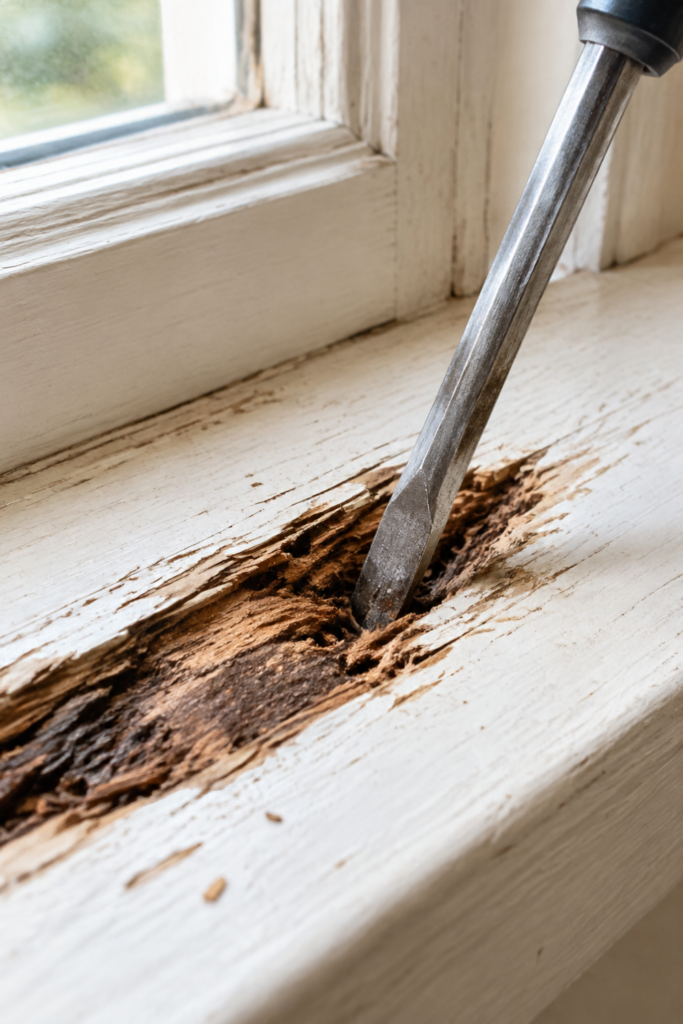
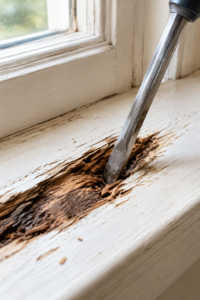
Press a screwdriver or awl into the wood near the problem spot. Sound wood resists and leaves a small dent. Rotted wood feels spongy, the tip sinks in easily, or the wood breaks apart in short, stringy fibers or small cubes. Peeling paint over solid wood is a paint problem. Soft wood under the paint is a rot problem.
Check a few inches past the visible damage, because rot often spreads under paint that still looks fine. Dark staining, paint that bubbles from behind, swelling at joints and gaps where caulk has pulled away are all worth probing.
Is it rot or termites?
They are different problems, and home inspectors often note both, which is where the confusion starts. Rot is decay caused by water sitting in wood. Termite damage is wood eaten from the inside, usually with mud tubes, hollow-sounding boards or tunnels running along the grain. If termites are suspected, a licensed pest control company should inspect and treat first. The damaged wood can be repaired after.
How far does the rot go?
Usually farther than it looks. Rot travels along the grain and into joints, so a soft spot at the bottom of a door frame can extend up the frame or into the sill below it. The only way to know is to probe every suspect area, not just the visible one, and note the full extent before the job is priced.
On homes in Brunswick, St. Simons Island, Sea Island and Jekyll Island, these are the places rot shows up most often:
- Bottom of door frames and brick molding, where water collects at the threshold
- Window sills and the lower corners of window trim
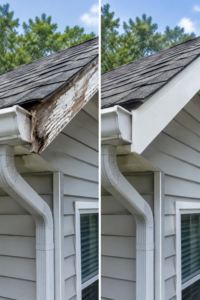
- Fascia boards behind gutters that overflow or pull away
- Bases of porch columns and posts
- Where decks and porches meet the house
- Trim and siding that touches the roof, soil or mulch
- Corner boards and the lowest row of siding
Is it structural? Most rot on a house is in trim: fascia, sills, casing and corner boards. When probing shows the rot continuing into the framing behind the trim, such as studs, a rim joist or a porch beam, the repair becomes structural carpentry and should be assessed before any painting is priced.
Should rotted wood be repaired or replaced?
It depends on how deep the damage goes and what the piece does. Epoxy works well for small, shallow damage on pieces that are detailed or hard to remove, like an original sill or a decorative bracket. Replacement is the right call for structural pieces, boards with rot running through them, and anywhere the damage is widespread.
| Situation | Usual repair | Why |
|---|---|---|
| Small soft spot on a detailed or original piece | Epoxy consolidant and filler, then prime and paint | Saves trim that is hard to match or remove |
| Rot through most of a board’s thickness | Replace the section or the full board | Filler cannot restore strength |
| Fascia, sill or column carrying weight | Replace | Strength matters more than saving the piece |
| Rot along a long run, like a whole fascia line | Replace the run | Patching every spot costs more and fails sooner |
Replacing only the bad section works when the rest of the board is sound, as long as the joint is cut, sealed and backed properly. Older trim and siding profiles can be matched so the repair disappears once it’s painted.
Should I switch to PVC or composite trim?
PVC and composite trim don’t rot, which makes them worth considering for the spots that keep failing, like the bottoms of door frames, column bases and fascia behind gutters. The tradeoffs are higher material cost, a slightly different look up close and more expansion and contraction, so they need the right fasteners and a paint rated for them. Pre-primed wood is still a sound choice when the water source is fixed and every side of the board is primed.
Why did it rot, and will it come back?
Wood rots when water gets in and can’t dry out. The most common causes are overflowing or leaking gutters, failed caulk at joints, missing flashing, trim touching soil or roof shingles, bare cut ends on boards, and earlier paint jobs that covered soft wood instead of replacing it. A repair that doesn’t address the cause will rot again.
That’s why every repair line on a good estimate should say two things: what is being replaced, and what is being done about the cause. New boards should be primed on all six sides before they go up, with cut ends sealed, since end grain soaks up water fastest. D&D backs its workmanship with a three-year warranty.
If you’re wondering whether a previous paint job hid the rot, it’s possible. Caulk and paint can cover soft wood for a season or two. It’s a fair question to ask any painter: what do you do when you find soft wood during prep?
What does wood rot repair cost?
Cost depends on how many spots there are, how far the rot goes, whether pieces are replaced or rebuilt, how hard the area is to reach, and whether the repair is painted at the same time. A single sill and a full fascia line are very different jobs.
The biggest worry most homeowners have is the price growing once the old wood comes off. Ask for an estimate that probes every suspect area and puts a per-board or per-foot price in writing for any hidden damage found during the job. That way you know the worst case before work starts.
Fixing the rot and painting at the same time usually costs less than doing them separately. The surface is prepped once, and new wood is never left sitting in bare primer while you wait on a second contractor.
Why it helps to have one company do the carpentry and the paint
Rot repair is two trades. Many carpenters don’t paint, and many painters don’t do carpentry, so homeowners end up scheduling two companies and coordinating between them. D&D Decorators has carpenters and painters on staff, so one crew probes, replaces, primes and paints in a single sequence, under one estimate and one point of contact.
Customers who review D&D most often mention dependable scheduling, professional crews, clear communication, thorough prep and consistent, high-quality work. On a rot repair, the prep is what decides whether the repair lasts.
“I particularly like that in addition to painting they can handle different needs that often accompany a job. They communicate well and their employees are great with which to work.”
Andy O., Google review
Wood rot repair in Brunswick, St. Simons Island, Sea Island and Jekyll Island
D&D Decorators is a locally owned painting and carpentry contractor that has worked on homes across the Golden Isles since 1986, from Old Town Brunswick and Oak Grove Island to St. Simons Island, Sea Island, Jekyll Island and Darien. We take on everything from a single rotted sill to a full exterior with rot repair and repainting. D&D is licensed, insured and a member of the Painting Contractors Association (PCA). Learn more about our exterior painting work.
“My house was last painted over 25 years ago, and needed a number of exterior repairs … I knew D&D did repair work, hired them, and was never disappointed. The carpentry took about two days, and was professionally done. The prep work was amazing, and probably covered every square inch.”
Dick W., Google review
Frequently asked questions
Can I just paint over rotted wood?
No. Paint and caulk can hide soft wood for a season, but the rot keeps spreading underneath and the paint fails again in the same spot. The rotted wood needs to be rebuilt or replaced, and the water source fixed, before painting.
Does homeowners insurance cover wood rot?
Usually not when it comes from gradual water exposure, which most policies treat as maintenance. Coverage is more likely when the rot results from a sudden, covered event. Your insurance agent can tell you what your specific policy includes.
Do you take small jobs, like one window sill?
Yes. Small repairs are usually paired with painting the repaired area so it matches the rest of the house.
Is the repair covered by a warranty?
Yes. D&D backs its workmanship with a three-year warranty.
How long does a rot repair take?
It depends on the number of spots and whether new pieces need to be milled to match. Your written estimate should state the expected number of days, including primer and paint.
Will the repair match the rest of the house?
It should. New trim is cut to match existing profiles, primed and painted in your existing color and sheen. Repainting the full board or trim run, rather than touching up only the patch, keeps it from standing out.
Have someone take a look
If you’ve found soft wood, or a home inspector has flagged it, D&D Decorators can probe the area, tell you how far it goes and give you a written estimate for the repair and the paint together. Estimates are free. Call 912-261-0306 or request an estimate. If the rot was noted on an inspection report, include the report with your request so the estimate can follow it item by item.